Apple Varieties from My Grandfather's
Orchard
|
 The
list
and descriptions of the following apple varieties come
principally from a discussion I had with my dad, Joseph R.
Henderson, on New Year's Day in 2004. The
list
and descriptions of the following apple varieties come
principally from a discussion I had with my dad, Joseph R.
Henderson, on New Year's Day in 2004.
He was then 89, but his memory of those apples was quite clear.
He did need some prompting at times. For example, he couldn't
remember the name of one favorite apple, but when I suggested
King of Tompkins County, his face lit up as he said "King" and
went on to describe it with crisp detail. Dad died at
Christmastime in 2010, and one of my favorite memories of his
storytelling (and he told a lot of stories) was that day we had
our conversation about the orchard.
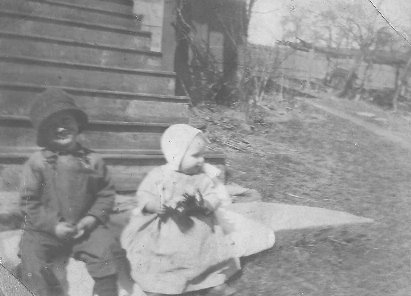
Pictured to the left are my father and his sister Martha in the
early 1920s, when the orchard would have been thriving.
|
Favorite Apples by Use (as remembered by my Dad)
|
- Favorites for eating out of
hand: King, Baldwin, Grimes Golden,
Sheepnose
- Favorites for baking and pies:
Greening, Baldwin, Northern Spy, McIntosh
- Favorites for fresh applesauce:
Yellow Transparent, Summer Rambo, Greening
- Most striking in
appearance: Rome Beauty (bright red),
York Imperial (a bit cock-eyed, it really stood out), Stayman
(with its deep red blush covering a crimson red stripes over
yellow), Wolf River (huge, but it was otherwise considered
worthless)
- Best all-around:
(but subject to debate even in his own family): Baldwin, King,
Stayman, Northern Spy
|
|
Variety
(and links to images)
|
Ripening Time
(in sw Pa.)
|
Origin
|
Size and Color
|
Notes Based on My
Father's Memories
|
Baldwin
AA,
NF,
GR,
USDA
|
Early October |
near Lowell, Mass.,
before 1750 |
Large.
Dark red
predominant
over yellow |
There were more Baldwin trees than any other variety. It was the
apple most asked for by name. My grandpap liked the Baldwin because
it had a pleasing appearance and good size, had a thick skin that
prevented the fruit from bruising, kept all winter, and was the most
versatile apple. It was excellent for fresh eating and good for both
cooking and baking. Its flavor was well balanced between sweet and
tart. Good cider was not made until the Baldwins had been picked and
given time to mellow. Its biggest flaw was that Baldwin apples were
plentiful only every other year. |
Banana
(Winter Banana)
AA,
NF,
GR,
USDA
|
October |
Case County, Indiana,
before 1880 |
Very large.
Off-yellow
with pinkish
blush |
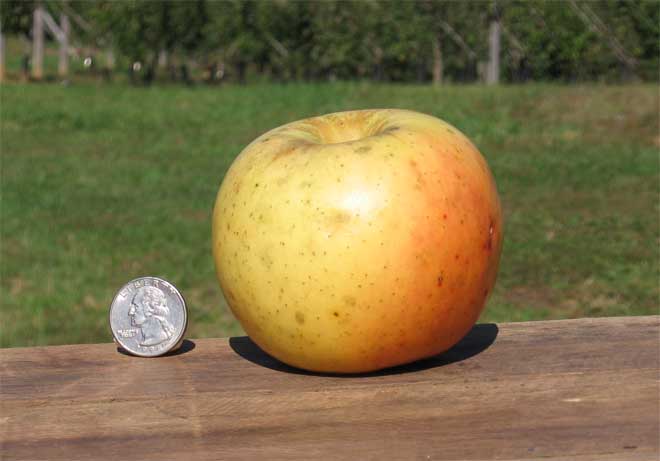
Not widely popular, and only one tree was grown. It had an oddly
sweet flavor and strong aroma that resembled nothing like a banana.
Although it ripened late, it was not one of the apples stored in the
apple cave. The fruit bruised easily and didn't keep long before
turning mealy. On the positve side, it was big and juicy. Even with
its odd flavor (elsewhere I've seen musky as a description), it was
primarily sold as an eating apple, since it wasn't very good cooked
or baked. Some apples were quite round while others were ribbed. |
|
Germantown
(Doctor of Germantown, Doctor)
USDA
|
Mid to Late October |
Pennsylvania,
before 1800 |
Medium.
Yellow, striped & spotted with red |
Dad couldn't remember much more about this apple than its name. It
was one of the last varieties to ripen, and it was mostly yellow. It
was most likely a regional name for the "Doctor" apple that
originated in Germantown, Pa. It was one of the 14 varieties kept in
the apple cave. |
|
Greening
(Northwestern Greening or Rhode Island
Greening?)
AA,
NF,
USDA
|
October |
Wisconsin, before 1872
or
Rhode Island,
before 1700
|
Large.
Yellow green |
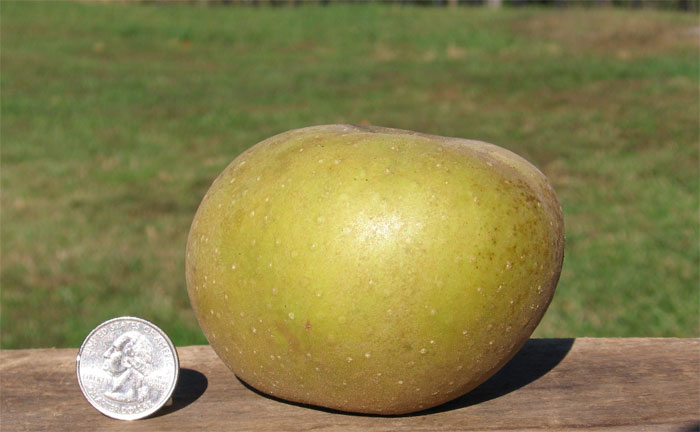
This apple was simply called a Greening. It was most likely either
a Rhode Island Greening or a Northwestern Greening, but Dad didn't
know. In 1915, the Rhode Island Greening was the fifth leading
commercial apple in the USA, but the Northwest Greening was also
widely grown in Pennsylvania. Dad's description of the apple fit
both greenings. The tree was vigorous and a reliable cropper. The
fruits were variable in size, but could be quite large. They were
smooth-skinned, greenish-yellow, and excellent keepers. Tart,
although mildly so, the Greenings were almost exclusively cooking
apples. They were versatile. They could be used in applesauce and
were second only to the Northern Spy for pies.
|
Grimes Golden
AA,
CF,
NF,
USDA |
Late September |
Brooke
County, WV,
before 1805 |
Medium to Large.
Yellow
|
A very flavorful apple and a favorite for those who wanted a sweet
apple with little tartness. The trees were bountiful and full of
fruit. Some years, however, since the blossoms ripened pretty early,
frost damage meant they didn't get a crop. Although favored for
fresh eating, some customers liked Grimes for sauces and pies,
because even though sweet, its rich flavor didn't bake out like some
other sweet apples. They kept well, except for a tendency for the
skin to shrivel after too many weeks in storage. |
|
Jonathan
AA,
NF,
USDA
|
September |
New York,
before 1830 |
Small to medium.
Dark red
|
Tart in flavor, they were considered mostly for fresh eating.
Perhaps because they were small, they were not good sellers. Since
Jonathans bruised easily and didn't store well, they weren't kept in
the apple cave. My Grandpap used them in a special way. They were
the apples he was willing to hand out to kids while he was on his
milk route to Iselin, a nearby company-owned mining town –
especially during the Depression when Iselin was populated by the
families of unemployed and underemployed coal miners. |
|
Variety
(and links to images)
|
Ripening Time
|
Origin
|
Size and Color
|
Notes Based on My
Father's Memories
|
King
(Tompkins King
or King of Tompkins
County)
AA,
NF,
USDA
|
Late September |
Jacksonville, NY,
before 1805 |
Extra large.
Red stripes
over yellow |
Both Dad's and Grandpap's favorite eating apple. It was large and
richly flavored -- sweeter than the Baldwin, but with a good touch
of tartness. The apple could get some members of the family in
trouble because of its size. Dad's younger siblings couldn't finish
a whole one, and Grandpap would get upset when he found half eaten
apples lying around. The King was used for both fresh eating and
cooking, but it was better for cooking when it not quite ripe. It
ripened earlier than the Baldwin, but was not as good a keeper as
the Baldwin. Dad remembered his father saying of the King that it
was "the way an apple is supposed to taste." |
McIntosh
AA,
NF,
USDA
|
Mid September |
Ontario,
before 1800 |
Medium.
Red blush
over green
& yellow-white |
Because they were smaller in size and didn't keep long before
turning mealy, they were not a top seller. They were one of the 14
varieties kept in the apple cave, but they weren't expected to last
until spring. Although it was sold primarily as a fresh eating
apple, it could be used for baking, as well. Dad remembers his
mother saying, "If you bring me some Macs, I'll make some pies."
Even if the McIntoshes tended to break down in texture in the
baking, their flavor and aroma made up for it. |
Northern Spy
AA,
NF,
USDA
|
Mid October |
East Bloomfield, NY,
before 1800
|
Red stripes over yellow
|
My grandpap kept only a few Spy trees, in contrast to his cousin,
Cree Hood, who swore by the Northern Spy and grew more of them than
any other variety. Many customers considered the Spy the very best
pie apple ("Spies for pies!"), so they had a prime location in the
apple cave. What my grandpap didn't like about the Northern Spy was
that it bruised too easily, and that was not good for either
handling and keeping. He would remark that a high percentage of the
Hoods' apples went to waste. Northern Spies were also more difficult
to pick. Short stemmed, they had to be pulled off with a more
elaborate twist. That short extra time per apple added up when
picking many bushels. |
Pippin
(Fall Pippin)
NF,
USDA
|
Early September |
Uncertain,
before 1800 |
Large.
Greenish yellow. |
One of the first varieties to ripen of the apples that were kept in the apple cave, but his father allowed Pippins to mellow for a week before selling them to improve flavor. Their chief competition in that part of the season was the Wealthy, and the Pippins were sweeter and more flavorful, but not as attractive. They were recommended for fresh eating and baking. Dad only remembered Pippins being called just that, but based on its color and season and the wider popularity of the apple back then, I'm certainly it was the Fall Pippin. |
[Summer]
Rambo
AA,
USDA
|
August |
France,
before 1600 |
Yellow green
with pink & red blush
|
Remembered fondly because it was one of the first apples to ripen
in the summer, but it was strictly for home use. Highly flavored.
Like other early apples, my grandmother used them for applesauce.
Some apples must have kept long enough to overlap with the first
of the pie apples, because my dad remembered that although his
mother wouldn't make a pie of all Rambos, she liked to add some to
give a pie extra flavor.
Although Dad called the apple the Rambo, I think because of its
season it was a Summer Rambo, not another variety usually just
called Rambo, but occasionally Winter Rambo. Both are very old
apple varieties. The Summer Rambo, or Rambour d'Ete, is said to
have originated in the village of Rambures in the Somme department
in the region of Picardy, not far from the English Channel. The
other Rambo was introduced before 1700 and possibly as early as
1640 by either Peter Gunnarsson Rambo, one of the original
settlers of New Sweden, or one of his children or grandchildren.
Since there is no written record of the variety before 1817, there
is no way of telling. There is a record that Peter Gunnarsson
Rambo brought fruit and garden seeds with him in a box, and from
one of those seeds could have grown the first Rambo. I am related
to Peter Gunnarsson Rambo through my father's mother's side of the
family [The only reason for this digression].
|
Rome Beauty
NF,
USDA
|
October |
Ohio,
before 1820 |
Large. Red stripes
almost fully
cover yellow
green
|
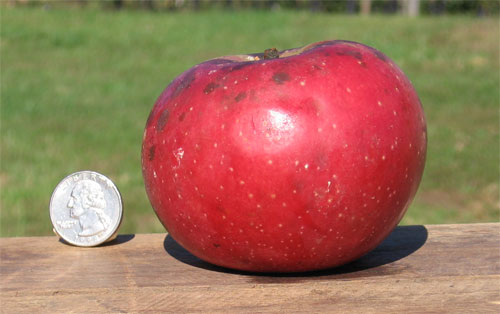
Beauty does have its own rewards. My grandpap liked to set out the
Rome Beauty apples for display. Being large, bright red, and often
perfectly round in shape, they attracted attention. That
characterisic made them a good seller, even though they were only
average for either fresh eating or cooking. One very good quality
that Grandpap appreciated was that the fruit didn't bruise easily
and stored well. It still looked good and may have improved in
quality in storage, so it was a particularly good seller in the
spring. |
Russet
(Roxbury?)
AA,
CF,
USDA
|
October |
Massachusetts before 1650 |
Medium.
Russetting over reddish
brown |
Excellent in cooking and gave cider an extra rich flavor, but Dad
did not like it for eating fresh. I think what he didn't like was
the texture of the leather coat. Dad praised it for keeping in
storage not just very long, but very well. Dad only remembered it
being called a russet, and when I tried to figure out which one, he
said it had a reddish tinge to its russet coloring. 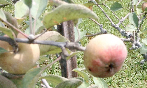 That
puzzled
me, because the Roxbury and Golden Russets, the two most popular
russet apples of the time, have a bronze blush that isn't normally
called red. In 2014, I may have stumbled on an answer in our own
orchard, since some of our Roxburys did indeed have some red on
them. Several of the old USDA
watercolors show red in their illustrations, as well. That
puzzled
me, because the Roxbury and Golden Russets, the two most popular
russet apples of the time, have a bronze blush that isn't normally
called red. In 2014, I may have stumbled on an answer in our own
orchard, since some of our Roxburys did indeed have some red on
them. Several of the old USDA
watercolors show red in their illustrations, as well. |
|
Variety
(and links to images)
|
Ripening Time
|
Origin
|
Size and Color
|
Notes Based on My
Father's Memories
|
| Sheepnose |
early |
? |
Large
|
This was one of the best flavored apples for a kid, almost honey
sweet, and very juicy. The apples were soft and not crunchy, and,
unfortunately, quickly got mushy. Under the family's one Sheepnose
tree could soon be seen lots of rotted drops. The tree grew near the
house, so it must have been planted before the orchard was added.
The shape of the fruit was elongated, so it did resemble a sheep's
nose. Dad only knew it as Sheepnose, and based on his description, I
am uncertain which of several varieties nicknamed Sheepnose it might
have been. Neither the Black Gilliflower nor Yellow Bellflower are
sweet early apples. The Chenango Strawberry is early and elongated,
but is as sharp as it is sweet. The Sweet Bough was a commonly
grown, large, early season apple in the nineteenth century known for
its honeyed sweetness. In shape it was usually round or ovate, but
it could be oblong conic (almost sheepnose shape), but I find no
reference that Sheepnose was one of its synonyms. |
Stark
USDA
|
October |
Ohio,
before 1870 |
Medium.
Dull red over yellow |
The Stark was a good apple, but neither exceptional in flavor nor
appearance. Thick skinned, it was an excellent keeper and didn't
bruise. Since the Hendersons were the only orchard growers in those
parts with them, the Starks often won prizes at the county fair. It
merited storage in the apple cave. |
|
Stayman
Winesap
AA,
CF,
USDA
|
Late October |
Leavenworth,
KS,
before 1870 |
Large.
Almost solid red |
Another great all purpose apple. The best apple in the minds of
several customers. Both sweeter and tarter than the Baldwin, with a
pleasant aroma, its flavor contrasts made it stand out. It was
another of the preferred apples for cider. Although it was early to
blossom, they were often the last trees to ripen, so some loyal
customers had a long wait for them to go on sale. Since it was an
excellent keeping apple, like many other of my grandpap's favorite
apples, it could be sold over a long season. |
Wealthy
AA,
NF,
USDA |
Early September |
Minnesota,
before 1860 |
Medium.
Solid red
when fully
ripe |
Very juicy, with a good texture. Good all-purpose apples, they
were mild in flavor. Since the fruit ripened sooner than the winter
apples, the apple season only really got going when the Wealthies
were ready. Although they have a reputation for being large, Dad
remembered them as being smallish in size. Competed well against the
Pippin and Macintosh, but not the later ripening varieties. The
trees were very hardy and could be counted on year after year. They
were among the 14 varieties stored in the apple cave, even though
they didn't keep as well. |
Wolf River
AA,
NF,
USDA |
Late August to September |
Wisconsin,
before 1880 |
Huge.
Red stripes
over yellow |
There was only one tree, big and tough, if not very handsome. It
was part of the old orchard planted by my great grandfather. The
huge size of the Wolf River apples would catch everyone's attention,
but unfortunately it was pretty dry and flavorless. When cooked, it
shriveled down to nothing. Another downside was that it didn't store
well. Grandpap didn't sell them, but, because of their size and
appearance, he placed a Wolf River as a novelty right on top each
bushel he sold. Mother could enter Wolf Rivers at the Indiana County
Fair and count on winning first prize, since at the fair, apples
were judged for appearance, not culinary quality. |
Yellow
Transparent
AA,
NF,
USDA |
Early August or even July |
Russia,
before 1800 |
Medium.
Yellow green |
Beloved because it was the first apple to ripen each year. It was
only fair to eat fresh, but when there are no other apples around,
the taste was pretty good. Not sold, but used by the family. Used
for applesauce by my grandmother rather than for baking. They were
long gone by the time most other apples were first picked. |
|
York
Imperial
AA,
CF,
USDA
|
Late October |
York, Pa.,
before 1830 |
Med./Large.
Yellow with red stripes |
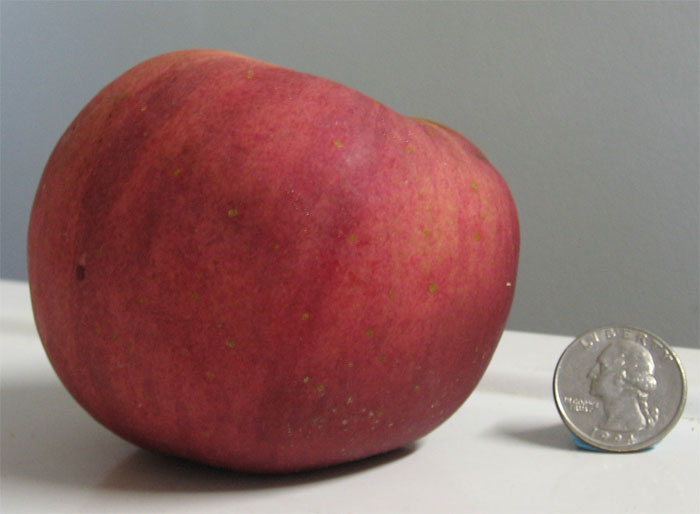
Another apple that was featured in display, although some were
distinctly "lop-sided." It was another excellent keeper, and it
didn't bruise. A few could be counted on to still be in decent shape
to eat at Easter time. It stayed crisp over time. Dad remembered its
flavor as a bit bland, but it had its loyal supporters. It was
another apple that ripened late and needed time to mellow. |
 Over
a
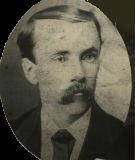
hundred twenty-five years ago, my great grandfather, Joseph
Henry
Henderson, planted an orchard on his farm in the
south-west corner of Indiana County,
Pennsylvania, about 35 miles northeast of Pittsburgh, and just
over the county line from
Over
a
hundred twenty-five years ago, my great grandfather, Joseph
Henry
Henderson, planted an orchard on his farm in the
south-west corner of Indiana County,
Pennsylvania, about 35 miles northeast of Pittsburgh, and just
over the county line from  My
Grandpap,
John G. Henderson improved upon his father's original
orchard, making significant changes by discontinuing some
varieties, removing trees, and adding others. One of his wife's
cousins, Bob Fulton, was an expert in grafting apple trees and did
much to enhance and improve the orchard. Behind his own house, Bob
Fulton had a tree with eleven different varieties grafted to it.
Sometime in the early 1920s Grandpap improved the enterprise by
having an apple cave built into the side of a hill. It was
reinforced with walls and a concrete slab for a roof. Fourteen
different varieties were kept in the apple cave. There were more
than fourteen varieties of apples in the orchard, but poor keeping
varieties were not stored. Those that didn't sell out in their
season were cooked, canned, or dried.
My
Grandpap,
John G. Henderson improved upon his father's original
orchard, making significant changes by discontinuing some
varieties, removing trees, and adding others. One of his wife's
cousins, Bob Fulton, was an expert in grafting apple trees and did
much to enhance and improve the orchard. Behind his own house, Bob
Fulton had a tree with eleven different varieties grafted to it.
Sometime in the early 1920s Grandpap improved the enterprise by
having an apple cave built into the side of a hill. It was
reinforced with walls and a concrete slab for a roof. Fourteen
different varieties were kept in the apple cave. There were more
than fourteen varieties of apples in the orchard, but poor keeping
varieties were not stored. Those that didn't sell out in their
season were cooked, canned, or dried. 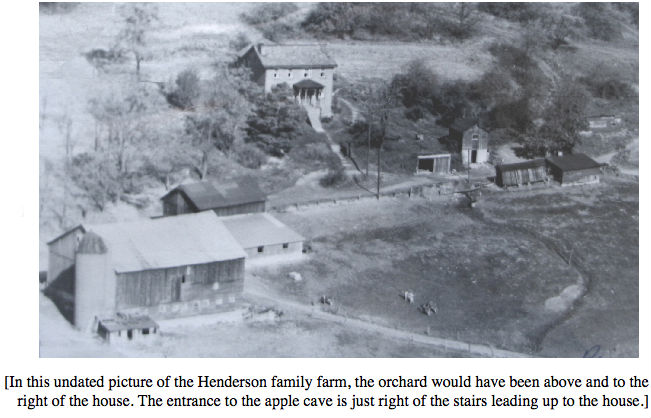 Each
apple
variety was well suited for the Mid-Atlantic region and fit the
early twentieth century standard for being commercially viable.
However, each had its own special quality and purpose. Grandpap
judged the quality of an apple variety primarily on its use and
keeping quality. He favored utility apples like the Baldwin that
were good for both cooking and fresh eating over specialty apples
good only for baking or only for eating out of hand. In the age
before electricification, mechanical refrigeration, and controlled
atmosphere storage, an apple's natural keeping quality was an even
more important quality and there was more of a need for a
succession of apple varieties from those maturing in early summer
to those ripening in November. With a head for business and
marketing, Grandpap certainly paid attention to flavor and
appearance, as well. My grandmother had her own opinion on the
apples, having some favorites for pies and others for fresh
applesauce. For canning, however, it didn't matter, and for apple
butter and canned applesauce she used whatever apples were in
danger of spoiling.
Each
apple
variety was well suited for the Mid-Atlantic region and fit the
early twentieth century standard for being commercially viable.
However, each had its own special quality and purpose. Grandpap
judged the quality of an apple variety primarily on its use and
keeping quality. He favored utility apples like the Baldwin that
were good for both cooking and fresh eating over specialty apples
good only for baking or only for eating out of hand. In the age
before electricification, mechanical refrigeration, and controlled
atmosphere storage, an apple's natural keeping quality was an even
more important quality and there was more of a need for a
succession of apple varieties from those maturing in early summer
to those ripening in November. With a head for business and
marketing, Grandpap certainly paid attention to flavor and
appearance, as well. My grandmother had her own opinion on the
apples, having some favorites for pies and others for fresh
applesauce. For canning, however, it didn't matter, and for apple
butter and canned applesauce she used whatever apples were in
danger of spoiling.